
The short answer: These therapies work through different mechanisms and are not interchangeable. HBOT changes oxygen delivery systemically under pressure. Red light therapy targets superficial tissue with photons. Cryotherapy triggers a cold-stress response. Infrared sauna promotes passive heating. HBOT sits in a different evidence category, particularly at 2.0 ATA.
Modern recovery menus are crowded. A client walks into a wellness facility and sees HBOT, red light therapy, cryotherapy, and infrared sauna positioned within a few feet of each other, often under the broad promise of “recovery” or “cellular health.” That makes intuitive sense from a business standpoint, but it also creates confusion. People start assuming the therapies are mostly interchangeable and differ only in vibe, price, or time commitment. They are not. These tools work through different mechanisms, target different bottlenecks, and make more sense for some goals than others.
The easiest way to compare them is to stop asking which one is “best” in the abstract. Better questions are: Which therapy changes oxygen delivery? Which one is more localized? Which one has better evidence for short-term soreness, skin-level healing, relaxation, or specific wound contexts? Which one is easiest to adhere to? Once you ask those questions, the overlap shrinks and the decision gets cleaner.
These therapies solve different problems before they ever compete
HBOT works through pressure-driven oxygen delivery, which is unusually distinct
HBOT is different from the rest of the stack because it changes oxygen availability systemically under pressure. Reviews describe HBOT as typically administered at pressures between about 1.5 and 3.0 ATA for 60 to 120 minutes depending on the indication, and the Undersea and Hyperbaric Medical Society notes that scientifically supported hyperbaric treatments are usually delivered between 1.9 and 3.0 ATA. That mechanism is the reason HBOT sits in a different category from light, cold, or passive heat. It is not just “relaxing in a chamber.” It is a pressure-and-oxygen intervention with implications for wound healing, certain approved medical indications, and recovery contexts where tissue oxygenation is part of the story.
This also explains why chamber specs matter more than many first-time buyers assume. If a facility is using HBOT as the centerpiece of a high-trust recovery offering, pressure, chamber construction, and protocol discipline are not optional details. They are the whole point. That is why it helps to read our guides on hyperbaric chamber pressure levels and hard-shell vs soft-shell hyperbaric chambers before comparing HBOT against anything else.
Red light, cryotherapy, and infrared sauna pull different biological levers
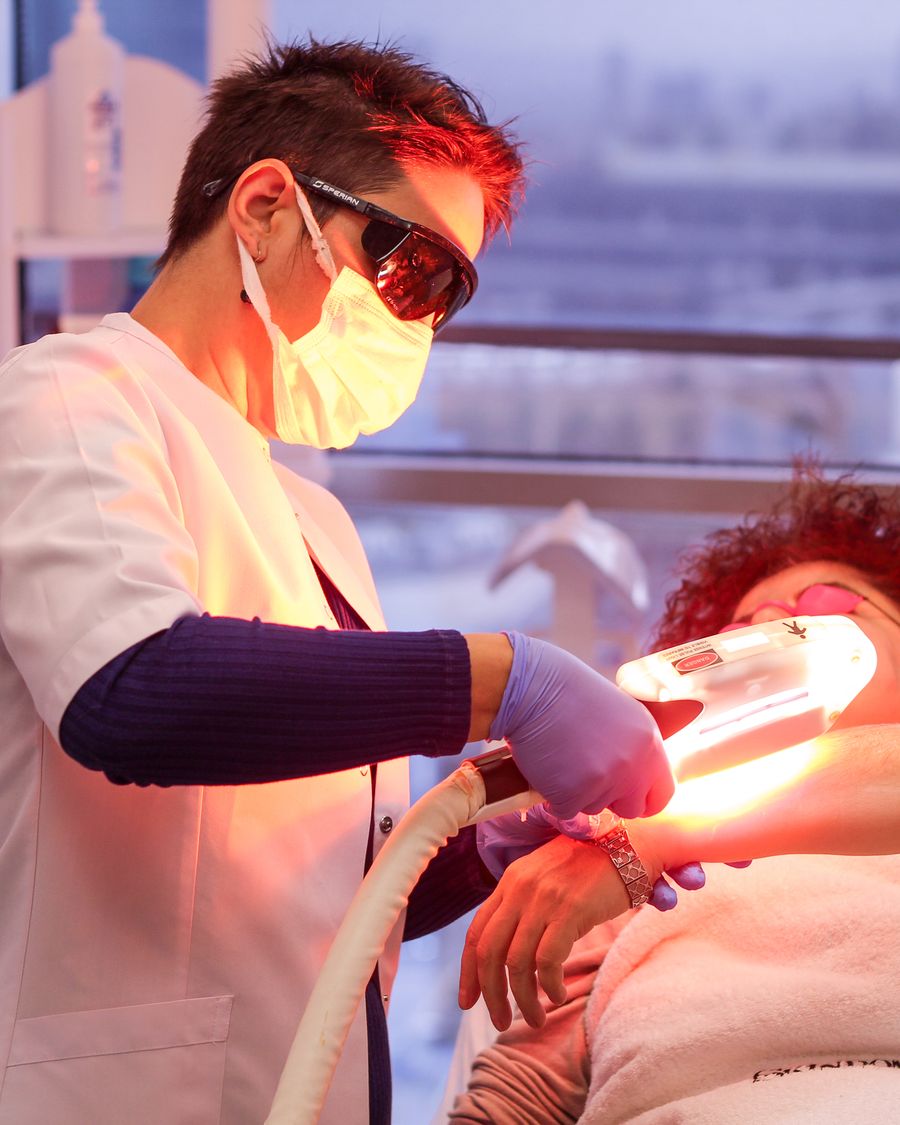
Red light therapy, often discussed as photobiomodulation or low-level laser therapy, is primarily a light-based intervention acting through local tissue signaling and mitochondrial pathways rather than pressure. A 2024 systematic review and meta-analysis on skin wounds found eighteen randomized controlled trials covering 670 wounds and reported improved wound-size reduction, healing rate, and pain outcomes compared with controls. That makes red light especially interesting for localized tissue applications, skin-oriented programs, and low-friction adjunctive care. It does not make red light a substitute for systemic oxygen delivery.
Whole-body cryotherapy is different again. A 2025 meta-analysis of eleven randomized controlled trials with 274 total participants reported lower IL-1β and higher IL-10 after cryotherapy exposure, suggesting potential anti-inflammatory and recovery-related effects in certain populations, especially athletes and obese individuals. Infrared sauna lives in yet another lane: passive heat, relaxation, cardiovascular stress, and sleep-adjacent routines. The broader sauna literature is more consistent than many people realize for general wellness, but the specific evidence for infrared sauna as a direct substitute for HBOT-style tissue oxygenation is much thinner. Heat, cold, light, and pressurized oxygen are not cousins pretending to be strangers. They are different tools.
| Modality | Primary mechanism | Best-fit use cases | Evidence character | What the session usually feels like |
|---|---|---|---|---|
| HBOT | Pressure-driven increase in oxygen dissolved in plasma | Wound-oriented healing contexts, serious recovery positioning, selected medical indications | Stronger in approved wound/medical contexts; mixed by off-label use case | Long, calm, enclosed, pressure changes at start and finish |
| Red light therapy | Local light-based cellular signaling / photobiomodulation | Skin, localized tissue support, easy adjunctive recovery or beauty use | Growing body of RCTs in wound and pain contexts | Short, easy, low-friction, usually open and comfortable |
| Cryotherapy | Cold exposure and short-term physiological stress response | Soreness, short-term recovery routines, perceived readiness | Useful short-term recovery signal; evidence is goal-specific | Very brief, intense, cold exposure |
| Infrared sauna | Passive heat exposure | Relaxation, heat tolerance, cardiovascular and sleep-adjacent wellness routines | Broader wellness literature exists, but not a direct substitute for HBOT | Longer heat session, relaxing for some, taxing for others |
Match the tool to the goal instead of comparing vibes
When HBOT is the clearest fit
If the goal is systemic oxygen delivery, wound-healing support, or a recovery offering anchored in a more medical-grade mechanism, HBOT stands apart. That does not mean it wins every category. It means it has a distinct reason to exist. You would not choose HBOT because you want the easiest five-minute add-on in a facial studio. You would choose it because pressure-driven oxygen delivery is the point, and because the service model is strong enough to justify the time, screening, and chamber infrastructure involved.
This is especially true when the conversation overlaps with tissue healing rather than simple “feel better” wellness. If the goal touches compromised tissue, difficult wounds, or serious performance recovery positioning, HBOT belongs in a different lane from general spa recovery tools. Our articles on HBOT for wound healing and HBOT for inflammation show why the language should stay specific here rather than drift into generic biohacking talk.
When another modality may be the better first pick
Plenty of clients do not need HBOT to accomplish what they actually want. If someone wants a low-barrier, low-intimidation, localized treatment with strong beauty and skin relevance, red light may be the cleaner choice. If the goal is quick post-training soreness relief or a psychologically energizing recovery ritual, cryotherapy may fit the moment better. If the client wants passive heat, decompression, and a routine that feels restorative rather than medical, infrared sauna often wins on adherence alone.
That is not a knock on HBOT. It is what honest modality matching looks like. The best facilities do not force every goal through the most expensive machine in the building. They explain why a therapy fits. Clients usually trust that logic more than a universal pitch. And in practice, trust is what makes a premium menu sustainable.
| Goal | HBOT | Red light | Cryotherapy | Infrared sauna |
|---|---|---|---|---|
| Deep tissue oxygen delivery | Best fit | Not designed for this | Not designed for this | Not designed for this |
| Localized skin or superficial tissue support | Useful only in a broad sense | Often strongest fit | Limited | Limited |
| Short-term post-exercise soreness ritual | Can play a role, but time-intensive | Possible adjunct | Often strong practical fit | Sometimes useful, especially subjectively |
| Relaxation and passive stress relief | Mixed; chamber experience varies by person | Light, easy | Usually not relaxing during exposure | Often strongest fit |
| Medical-style wound support context | Most relevant | Adjunctive at best | Not a primary choice | Not a primary choice |
Can you combine these therapies?
Stacking can make sense, but only when each tool has a job
The smartest recovery menus use multiple modalities without pretending they all do the same thing. A facility might use HBOT as the centerpiece for high-trust recovery or tissue-focused programming, then place red light alongside it for localized tissue or skin support, cryotherapy for brief readiness-focused recovery rituals, and sauna for decompression or heat-based conditioning. The combination works when the logic is explicit. It gets messy when stacking is used as a substitute for explanation.
Athletes and high-frequency wellness users already build stacks intuitively. They do not just want “more biohacking.” They want tools that solve different problems on different days. The operator’s job is to give that instinct structure. What is the target today: tissue healing, soreness, calm, circulation, sleep, or perceived readiness? Once that question is answered, stacking becomes strategic rather than ornamental.
Good wellness menus teach tradeoffs instead of making everything sound universal
One pattern we see in the field is that clients become easier to serve once they understand that modality choice is not a referendum on what is “strongest.” It is a matching problem. Someone who understands why HBOT takes longer, requires more screening, and carries a more serious evidence profile in certain contexts is much less likely to compare it lazily with a ten-minute cryotherapy session. That clarity also protects the brand. Facilities that explain differences well tend to sound more credible and less trendy.
If you are building that kind of menu, your content should mirror the same discipline. Connect people from this article to HBOT for athletic recovery, can HBOT improve sleep?, and what happens during your first HBOT session. That internal cluster helps users self-sort into the right conversation instead of bouncing after one comparison page.

Final thoughts
HBOT, red light therapy, cryotherapy, and infrared sauna are not four versions of the same recovery gadget. HBOT is the oxygen-and-pressure intervention. Red light is the localized light-based signaling tool. Cryotherapy is the short cold-stress modality. Infrared sauna is the passive heat ritual with its own wellness profile. Each can be useful. None should be sold as a universal answer.
If you are evaluating HBOT inside that broader landscape, start with the mechanism, then look at the evidence quality, then the user experience, then the business fit. For chamber-specific context, explore the chamber, read more about Superhuman, or contact the team to talk through where HBOT belongs in a serious premium recovery menu.